

How long does it take to make a fiber quilt?
Nov 04, 2025
Leave a message
How long does it take to make a fiber quilt?
As a supplier of Fiber Quilts, I often get asked about the time it takes to produce these cozy and practical bedding items. The process of making a fiber quilt is a blend of art and science, involving multiple steps that each contribute to the final product's quality and comfort. In this blog post, I'll break down the various stages of fiber quilt production and estimate how long each step takes, giving you a comprehensive understanding of the timeline.
1. Material Sourcing and Preparation (1 - 2 weeks)
The first step in making a fiber quilt is sourcing the raw materials. The primary component of a fiber quilt is the filling material, which can be made from various types of synthetic fibers such as polyester or natural fibers like cotton. We carefully select high - quality fibers that offer good insulation, softness, and durability.
For synthetic fibers, we source them from reliable suppliers who adhere to strict quality control standards. These fibers are usually shipped in large bales. Once received, they need to be opened, fluffed, and cleaned to remove any impurities. This process can take a few days.
If we're using natural fibers like cotton, the preparation is more involved. Cotton needs to be ginned to separate the fibers from the seeds, and then it may go through additional processes like carding to align the fibers. Sourcing high - quality cotton can take a bit longer, especially if we're looking for organic or sustainably grown options. Overall, the material sourcing and preparation stage can take anywhere from 1 to 2 weeks, depending on the availability and type of fibers.
2. Quilt Top and Back Fabric Selection and Cutting (1 - 3 days)
The next step is to choose the fabrics for the quilt top and back. We offer a wide range of fabric options, from soft and breathable Pure Cotton Quilt to luxurious silk blends. The fabric selection depends on the customer's preferences, the intended use of the quilt, and the overall design.
Once the fabrics are selected, they are cut into the appropriate sizes and shapes. This is a precise process that requires skilled workers and the use of cutting machines. The time it takes to cut the fabrics depends on the complexity of the design and the size of the quilt. For a standard - sized fiber quilt, this stage can take 1 to 3 days.

3. Quilting Process (3 - 7 days)
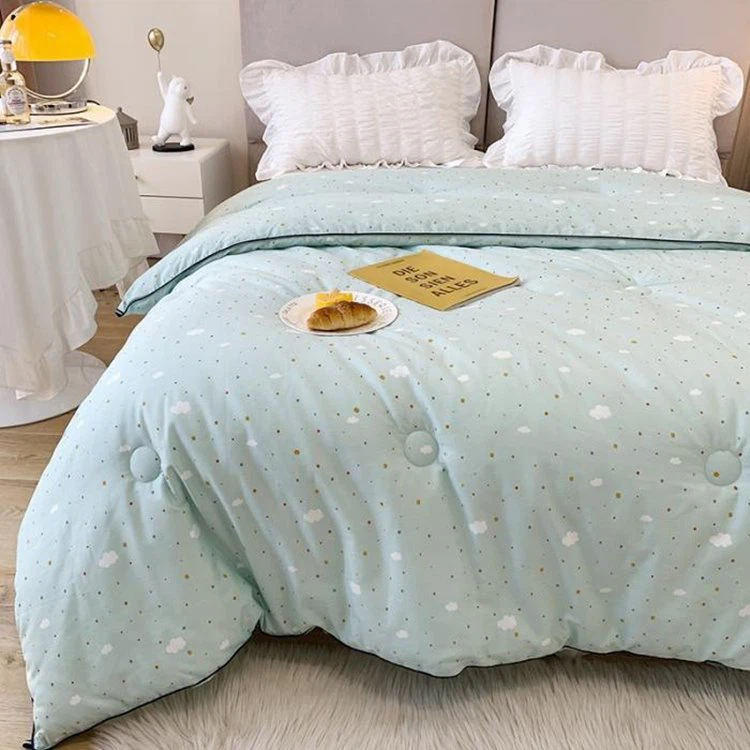
Quilting is the heart of the fiber quilt - making process. It involves stitching the quilt top, filling, and back fabric together to create the characteristic quilted pattern. There are several quilting methods, including hand - quilting, machine - quilting, and computer - guided quilting.
Hand - quilting is a labor - intensive and time - consuming process that requires a high level of skill. It can take several days to weeks to complete a single quilt, depending on the size and complexity of the design. However, hand - quilted fiber quilts are highly valued for their unique and intricate patterns.
Machine - quilting is a more efficient method that can produce quilts at a faster pace. We use industrial - grade quilting machines that can stitch multiple layers of fabric and filling together quickly. The time it takes to machine - quilt a fiber quilt depends on the size of the quilt and the density of the quilting pattern. For a standard - sized quilt, machine - quilting can take 3 to 7 days.
Computer - guided quilting is a relatively new technology that allows for precise and complex quilting patterns. It uses computer software to control the quilting machine, ensuring consistent and accurate stitching. This method can be faster than hand - quilting and can produce high - quality results.
4. Binding and Finishing (1 - 2 days)
After the quilting is complete, the next step is to add the binding. The binding is a strip of fabric that is sewn around the edges of the quilt to give it a finished look and prevent the edges from fraying. We offer a variety of binding options, including different colors and fabrics to match the quilt design.
The binding process involves cutting the binding fabric to the appropriate length, folding it in half, and then sewing it to the edges of the quilt. This is a relatively quick process that can be completed in 1 to 2 days for a standard - sized fiber quilt.
Once the binding is added, the quilt goes through a final inspection to ensure that it meets our quality standards. Any loose threads are trimmed, and the quilt is cleaned and pressed to give it a smooth and professional appearance.
5. Quality Control and Packaging (1 - 2 days)
Quality control is an essential part of our production process. We have a team of experienced quality control inspectors who check each fiber quilt for any defects, such as uneven stitching, loose filling, or fabric flaws. If any issues are found, the quilt is sent back to the production line for repair.
After passing the quality control inspection, the fiber quilt is carefully packaged. We use high - quality packaging materials to protect the quilt during shipping. The packaging process includes folding the quilt neatly, placing it in a plastic bag, and then boxing it. This stage can take 1 to 2 days, depending on the quantity of quilts being packaged.
Total Time to Make a Fiber Quilt
In total, the process of making a fiber quilt can take anywhere from 2 to 3 weeks, depending on the complexity of the design, the production method, and the availability of materials. However, we strive to meet our customers' deadlines and can often expedite the production process if needed.
If you're interested in purchasing Fiber Quilt for your home or business, we'd love to hear from you. Our team of experts can help you choose the right quilt for your needs, and we offer competitive pricing and excellent customer service. Whether you're looking for a standard - sized fiber quilt or a custom - designed one, we can work with you to create the perfect bedding solution. Contact us today to start discussing your fiber quilt requirements and let's work together to bring warmth and comfort to your space.
References
- Textile Manufacturing Handbook: A Comprehensive Guide to Fabric Production.
- Encyclopedia of Quilting Techniques and Styles.
- Quilting Industry Trends and Best Practices Reports.