

What materials are bathrobes made of?
Nov 20, 2025
Leave a message
Bathrobes are a staple in many households, offering comfort, warmth, and a touch of luxury after a bath or shower. As a bathrobe supplier, I've had the privilege of working with a wide range of materials, each with its unique characteristics and benefits. In this blog post, I'll explore the various materials used to make bathrobes, helping you understand what to look for when choosing the perfect one for your needs.
Cotton
Cotton is one of the most popular materials for bathrobes, and for good reason. It's soft, breathable, and absorbent, making it ideal for drying off after a bath or shower. Cotton bathrobes are also hypoallergenic, which means they're less likely to cause skin irritation, making them suitable for people with sensitive skin.
There are different types of cotton used in bathrobe production. Egyptian cotton is known for its long fibers, which make it strong, soft, and highly absorbent. Pima cotton, another high - quality option, offers similar properties and is often used in luxury bathrobes. Regular cotton is also a common choice, providing a more affordable alternative without sacrificing too much in terms of quality.
Cotton bathrobes come in various styles, from lightweight and airy options suitable for summer to thicker, more plush versions for colder months. They can be easily machine - washed, which is a great advantage for maintaining their cleanliness. If you're interested in a cotton blend option for men, check out our Men's Cotton Blend Bathrobe.
Terry Cloth
Terry cloth is a type of cotton fabric that is specifically designed to be highly absorbent. It has loops on one or both sides of the fabric, which increase its surface area and allow it to soak up more water. Terry cloth bathrobes are a classic choice, often seen in hotels and spas.
These bathrobes are great for quickly drying off, as they can absorb a large amount of moisture in a short period. They're also durable and can withstand regular washing. Terry cloth bathrobes can be found in different weights, with heavier ones providing more warmth and absorbency, while lighter ones are more suitable for warmer climates.
One of the drawbacks of terry cloth is that it can take longer to dry compared to some other materials. However, with proper care, it can last for a long time and remain a reliable choice for your post - bath routine.
Waffle Weave
Waffle weave is another cotton - based fabric used in bathrobes. It gets its name from the distinctive waffle - like pattern on the surface of the fabric. This pattern not only gives the bathrobe a unique look but also provides some practical benefits.
The waffle weave structure allows the fabric to be more breathable than some other materials. It also has good absorbency, although it may not be as absorbent as terry cloth. Waffle weave bathrobes are often lightweight and airy, making them a great choice for warmer weather or for those who prefer a less bulky robe.
They're also relatively easy to care for and can be machine - washed. The waffle pattern can add a touch of texture and style to your bathrobe collection, making it a fashionable option as well as a functional one.
Silk
Silk is a luxurious material that is often associated with elegance and comfort. Silk bathrobes are soft, smooth, and have a natural sheen that gives them a high - end look. They're also very breathable, allowing your skin to breathe while you wear them.
Silk is a natural protein fiber, which makes it hypoallergenic and gentle on the skin. It has a cooling effect, making it suitable for use in warmer climates or during the summer months. Silk bathrobes are often lightweight and drape beautifully, giving you a feeling of sophistication.
However, silk bathrobes require more delicate care compared to cotton or terry cloth. They usually need to be dry - cleaned or hand - washed to maintain their quality. They're also more expensive, but for those who appreciate luxury and are willing to invest in a high - quality bathrobe, silk is an excellent choice.
Bamboo
Bamboo is an increasingly popular material for bathrobes, and it offers several advantages. Bamboo fibers are soft, smooth, and gentle on the skin, similar to silk. They're also highly absorbent, making them effective at drying off after a bath or shower.
Bamboo is a sustainable material, as bamboo plants grow quickly and require less water and pesticides compared to cotton. Bamboo bathrobes are also naturally antibacterial and odor - resistant, which means they can stay fresh for longer periods between washes.
These bathrobes are breathable and have a cooling effect, making them suitable for all seasons. They can be machine - washed, but it's important to follow the care instructions to ensure their longevity.
Fleece
Fleece is a synthetic material that is known for its warmth and softness. Fleece bathrobes are a great choice for colder weather, as they provide excellent insulation. They're also lightweight and easy to move around in.
Fleece is made from polyester fibers, which are durable and resistant to shrinking and stretching. It's also quick - drying, so you don't have to worry about it staying wet for long. Fleece bathrobes come in a variety of colors and styles, and they can be a fun and practical addition to your wardrobe.
However, fleece is not as absorbent as some natural materials like cotton or bamboo. It may not be the best choice for drying off immediately after a bath, but it's perfect for keeping you warm once you're dry.
Linen
Linen is a natural fiber made from the flax plant. Linen bathrobes are breathable and have a cool, crisp feel. They're great for hot weather, as they allow air to circulate around your body, keeping you cool and comfortable.
Linen is a durable material, but it does wrinkle easily. However, many people appreciate the natural, relaxed look of wrinkled linen. Linen bathrobes are also absorbent, although not as absorbent as cotton or terry cloth.
They can be machine - washed, but it's best to use a gentle cycle to prevent excessive wrinkling. Linen bathrobes have a rustic charm and are a great option for those who prefer a more natural and casual look.
Wool
Wool is a warm and insulating material that is often used in winter bathrobes. Wool bathrobes are made from sheep's wool or other types of animal fibers, such as alpaca or cashmere. They provide excellent warmth and can keep you cozy in cold weather.
Wool is also naturally absorbent and can wick away moisture from your body. It's a durable material, but it requires special care. Wool bathrobes usually need to be dry - cleaned or hand - washed in cold water to prevent shrinking.
Wool bathrobes can be a bit heavy and bulky, but they're a great choice for those who live in colder climates or want an extra - warm robe for the winter months.
Blends
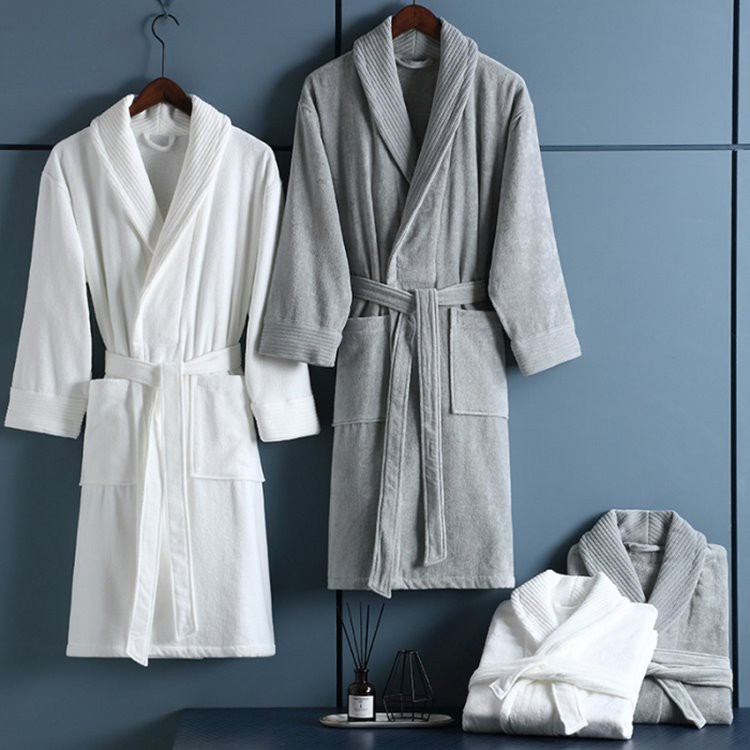
Many bathrobes are made from blends of different materials. Blending materials allows manufacturers to combine the best properties of each material. For example, a cotton - polyester blend may offer the softness and absorbency of cotton with the durability and quick - drying properties of polyester.
Blended bathrobes can be a cost - effective option, as they may offer a good balance of quality and price. They can also be designed to meet specific needs, such as providing more warmth or better absorbency. When choosing a blended bathrobe, it's important to consider the ratio of each material and how it will affect the performance of the bathrobe.
Conclusion
As you can see, there are many different materials used to make bathrobes, each with its own unique characteristics and benefits. Whether you're looking for a luxurious silk robe, a practical cotton terry cloth one, or a warm wool bathrobe for the winter, there's a material out there to suit your needs.
As a bathrobe supplier, I'm committed to providing high - quality bathrobes made from the best materials. If you're interested in purchasing bathrobes for your home, hotel, or business, I encourage you to contact me to discuss your specific requirements. We can work together to find the perfect bathrobes that meet your needs and budget.
References
- "Textiles: Fiber to Fabric" by Mary A. Vainieri
- "The Handbook of Fiber Science and Technology" edited by Menachem Lewin and Eli M. Pearce
- Various industry reports and research on bathrobe materials and production.