

How do I make a flying geese quilt?
Nov 05, 2025
Leave a message
Making a flying geese quilt is a rewarding and creative endeavor that combines the art of quilting with a timeless pattern. As a quilt supplier, I've had the privilege of witnessing the beauty and craftsmanship that goes into these stunning pieces. In this blog post, I'll share my insights and step-by-step guide on how to make a flying geese quilt, from selecting the right materials to the final stitches.
Step 1: Choose Your Fabrics
The first step in making a flying geese quilt is selecting the right fabrics. You'll need a variety of fabrics for the geese, the background, and the border. When choosing fabrics, consider the color scheme, pattern, and texture. You can opt for a traditional color palette of blues and whites to mimic the look of the sky and geese, or you can get creative and choose bold, bright colors for a modern twist.
For the geese, I recommend using a solid or small print fabric that will allow the shape of the geese to stand out. For the background, a coordinating solid or a subtle print will work well. And for the border, you can choose a fabric that ties everything together or adds a pop of color.
As a quilt supplier, I offer a wide range of high-quality fabrics, including Pure Cotton Quilt and Fiber Quilt. These fabrics are perfect for making a flying geese quilt, as they are soft, durable, and easy to work with.
Step 2: Cut Your Fabrics
Once you've selected your fabrics, it's time to cut them into the appropriate shapes and sizes. For the flying geese, you'll need to cut squares and rectangles of different sizes. The size of the geese will depend on the overall size of your quilt and the look you're going for.
To cut the geese, you can use a rotary cutter and a cutting mat. First, cut squares of the background fabric and rectangles of the geese fabric. Then, place the rectangle on top of the square, right sides together, and draw a diagonal line from corner to corner. Sew along the line, 1/4 inch on either side, and then cut the square in half along the diagonal line. Press the seams open, and you'll have two flying geese units.
Repeat this process until you have enough geese units to create your quilt top. You can arrange the geese in different patterns, such as a traditional V-shaped pattern or a more modern random pattern.
Step 3: Assemble Your Quilt Top
Once you have all of your flying geese units cut and pressed, it's time to assemble your quilt top. Start by arranging the geese units on a flat surface, such as a design wall or a large table. You can use pins or masking tape to hold the units in place.
Once you're happy with the arrangement, start sewing the geese units together in rows. Use a 1/4 inch seam allowance and press the seams open or to one side. Then, sew the rows together to create the quilt top.
Step 4: Add the Border
After you've assembled your quilt top, it's time to add the border. The border will give your quilt a finished look and help to frame the flying geese pattern.
To add the border, cut strips of fabric that are the desired width and length. Sew the strips to the sides and top and bottom of the quilt top, using a 1/4 inch seam allowance. Press the seams open or to one side.
Step 5: Layer and Quilt Your Quilt
Once you've added the border, it's time to layer and quilt your quilt. You'll need three layers: the quilt top, the batting, and the backing fabric.
Lay the backing fabric on a flat surface, wrong side up. Then, lay the batting on top of the backing fabric, smoothing out any wrinkles or bumps. Finally, lay the quilt top on top of the batting, right side up. Use pins or a quilting spray to hold the layers together.
Next, it's time to quilt your quilt. You can choose to quilt your quilt by hand or by machine. Hand quilting is a traditional method that involves using a needle and thread to stitch through all three layers of the quilt. Machine quilting is a faster method that involves using a sewing machine to stitch the layers together.
When quilting your quilt, you can choose a simple stitch pattern, such as straight lines or a meandering pattern, or you can get more creative and use a decorative stitch pattern.
Step 6: Bind Your Quilt
After you've quilted your quilt, it's time to bind the edges. The binding will give your quilt a finished look and help to protect the edges from fraying.
To bind your quilt, cut strips of fabric that are 2 1/2 inches wide and the desired length. Fold the strips in half lengthwise, wrong sides together, and press. Then, sew the binding to the raw edges of the quilt, using a 1/4 inch seam allowance. Fold the binding to the back of the quilt and hand stitch it in place.
Step 7: Enjoy Your Flying Geese Quilt
Congratulations! You've just made a beautiful flying geese quilt. Now it's time to enjoy your creation and show it off to your friends and family.
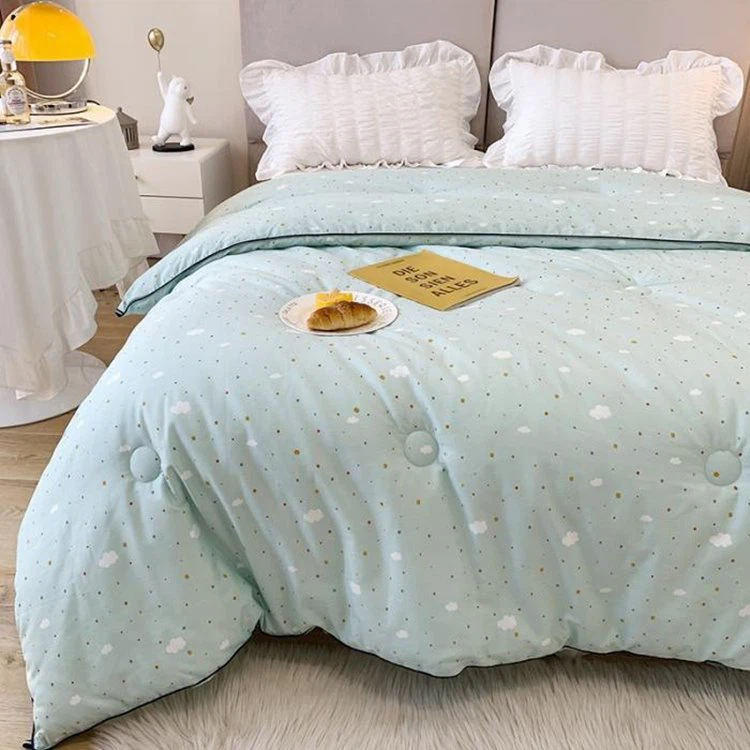

A flying geese quilt is a timeless piece of art that can be passed down from generation to generation. It's also a great way to express your creativity and add a personal touch to your home decor.
If you're interested in purchasing high-quality fabrics for your next quilting project, please don't hesitate to contact me. As a quilt supplier, I offer a wide range of fabrics, including Pure Cotton Quilt and Fiber Quilt. I'm always happy to help you find the perfect fabrics for your project and answer any questions you may have.
References
- "The Complete Guide to Quilting" by Judy Hopkinson
- "Flying Geese Quilts: 20 Projects with a Timeless Pattern" by Elizabeth Hartman