

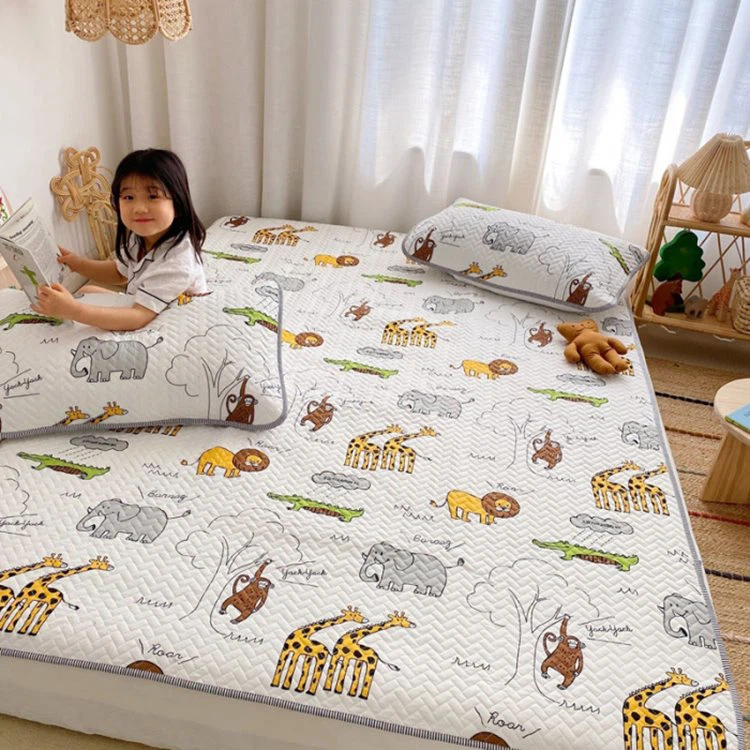
Washable Mattress Cover
Description
Technical Parameters
Why Choose Us
Our Products
Our company offers a range of products, including bedding, home fabric decorations, home clothing, multifunctional seat covers, and velvet toys.
Our Factory
Nantong Xinchen Home Co., Ltd. has been established for over 20 years. Located in Rugao, Nantong, our factory is a two-hour drive from Shanghai. We have 120 employees, including 10 technicians.
Production Equipment
We use a variety of sewing machines and special machines, with over 100 sets in total. This includes 8 single-needle quilting machines.
After-Sales
We value our customers and strive to exceed their expectations with our after-sales service. Our goal is to ensure that our customers feel completely confident and satisfied with our products and services.
In the realm of home care and personal hygiene, washable mattress covers stand out as a beacon of practicality and comfort. These innovative covers serve not only to protect the longevity of your mattress but also enhance your sleeping environment, making them a quintessential element for any bedroom. Ideal for families with young children, pet owners, or anyone looking for an easy-to-maintain bedding solution, washable mattress covers are designed to withstand the rigors of regular washing, ensuring a consistently clean and allergen-free sleep surface. As we embrace the warmer days of August, the importance of maintaining a fresh and hygienic sleep area becomes even more pronounced. The increased humidity can foster the growth of mold and mildew, but a washable cover acts as a reliable barrier, safeguarding your mattress against moisture and the resultant microbial growth.

Benefits of Using the Mattress Protector
Protects the Mattress from Dust:
Dust particles have a tendency to accumulate over time. People who don't clean their surroundings daily are likely to notice the accumulated dust on every surface of their house. Dust damage affects all sorts of things. It can cause electronic equipment to stop functioning.
Protects the Mattress from Bed Bugs
Bed bugs are one of the common threats to the mattress affecting its longevity and good hygiene. They live between the fibres, the materials that form the inside of your mattress. Bed Bugs are contagious critters and tend to bite you when you are asleep. They are very tiny and cannot be detected by the naked eye. And therefore, very hard to eliminate. These tiny critters are brought into the house after someone has spent time in hotels or households that already have them.
Protects the Mattress from Bed Bugs
Regardless of what size of mattress you own or how many people sleep on it, if even a single person sweats a lot, the sweat is bound to seep into the mattress's interior. Spilling liquids such as water or juices on the mattress can damage it. The spilled liquid will be absorbed by the mattress, and there is no easy way to clean it. Furthermore,
Helps Extend the warranty of a Mattress
Many premium Mattress brands offer at least 10 Years warranty with a mattress. aloha's mattresses come with a 20 Years warranty. This warranty includes complete repair or replacement within the first 10 years. And for the latter of the 10 years, you'll get a replacement or a repair credit of 50%.
Lengthens the Life of your Mattress
Many brands claim that their mattress is made from 100% certified organic and eco-friendly materials, but very few dedicatedly and truthfully offer that in reality. Numerous brands use internal components that cannot be recycled and take over hundreds of years to biodegrade, harming our ecosystem.
Protects the Mattress from Stains
Count the number of times you have dropped food on your mattress, couch, chair, or any surface you have frequently found yourself eating on. Very few people stick to the rules of reserving food for the dining table. Most prefer too much food or binge eat in bed, and they are highly likely to bring along beverages as well. It increases the chances of dropping your food or spilling a drink on the mattress. Accidents happen, and therefore it behoves us to be prepared for situations like these.
Protects the Mattress against kids Bed Wetting
Bedwetting is common amongst young children and sometimes in senior citizens. Without a Mattress protector, you'll be faced with stained sheets and a mattress. Cleaning the sheets would be no big trouble, but it might not get the unpleasant urine odou.
Types of Mattress Protectors
There are generally two types of mattress protectors you will find: fitted and encasement. Below are the differences between them. Most of them fit over your bed like a fitted sheet, making them easy to apply to your mattress.

Fitted Protectors
Fitted mattress protectors fit your mattress like a bedsheet, with a band that tucks underneath. These kinds of mattress covers are good for:
- Stopping moisture
- Blocking dust mites
- Blocking allergens
- Preventing stains
Ensure that the mattress protector you select is machine washable. Keep in mind that most mattress covers cannot be put in the dryer because it may cause them to shrink; therefore, they must be air-dried.
Encasement Protectors
Unlike a fitted protector, encasements cover and protect the entire mattress, not just the top and sides. As the name suggests, they encase the mattress completely (typically using a zipper) so that no part of the mattress is exposed to the outside environment.
- Encasement protectors are good for:
- Stopping moisture
- Blocking dust mites
- Blocking allergens
- Preventing stains from bodily fluids
- Stopping bed bugs
- Protecting the bottom of your mattress from dirt
- Protecting your memory foam mattress from soaking up moisture, which may cause it to lose its shape over time.

How to Wash a Mattress Protector the Correct Way
Yes, you can wash a mattress protector, whether it's made from natural or synthetic materials. Regular washing will remove allergy triggers like mites and dead skin cells. It will also prevent stains and unpleasant odors from setting, thereby prolonging the lifespan of your mattress protector.
Washing your mattress protector is essential, but different materials will have different care instructions to maintain their condition. Follow your manufacturer's care label to maximize your protector's longevity and durability.
A good rule of thumb is to wash your mattress protector once every two months. However, this cleaning frequency may need to be increased in certain situations, such as:
●If you've just recovered from an illness, clean your mattress protector immediately, regardless of how soon its last wash was. This will help remove any lingering bacteria and help you breathe more easily as you recover.
●If you spill something on your mattress protector, you should also clean it immediately to prevent the spill from setting into the fabric. Set-in stains are harder to remove and can damage the fabric.
●If you suffer from allergies like a runny nose or sneezing, clean your mattress protector once every two weeks. This helps prevent allergens from building up in the fabric and triggering reactions in allergy sufferers.
To wash your protective mattress cover correctly, check the cover's label to see if it's machine-washable or requires delicate care. Here's how to clean your cover in either case:
If your mattress protector is machine-washable, follow these instructions:
● Check the care label. This will indicate the recommended water temperature, dryer cycle, and other special washing instructions.
● Place your mattress protector in the washing machine. Typically, cold water is preferred to prevent shrinking. Use a mild detergent that does not contain fabric softeners, as these can reduce your mattress protector's ability to absorb liquids.
● Use a gentle wash cycle. Selecting "delicate" or "gentle" machine settings is best to prevent fabric damage.
● Run a second rinse cycle. This removes any remaining detergent from the fabric. Don't skip this step, as laundry detergent may irritate your skin.
Some manufacturers may explicitly state that your protector cannot be machine-washed. Here's how you can keep it clean without a washing machine:
● Remove your mattress protector from the mattress.
● Dab a mild detergent on stains for spot cleaning.
● Gently hand-wash the top part of the cover using warm or cold water. Avoid using hot water to prevent shrinking.
● Let your cover air-dry completely before putting it back on the mattress.
You should replace your mattress protector after one to two years, even if there's no visible wear and tear. A mattress protector keeps your mattress fresh by blocking moisture and dust mites, but this means it is exposed to these substances.
Over time, dander, bodily fluids, dust, and excess moisture will build up. With proper washing and regular spot-cleaning, you can keep your protector in good condition for up to two years. Always follow the label's recommended settings to preserve the protector's material and prevent deformation.
Comfort
The mattress cover serves as a comfort layer, preventing a sleeper from lying directly on top of the foam. Memory foam mattresses typically have a zip-off cover that can be removed, unlike traditional pocket sprung mattresses, which have a permanent cover that encloses the fillings, spring units, and toppings. A tape-edged cover is generally of higher quality than a zip-off cover.
Without the cover, you would be sleeping directly on the foam, which can have a somewhat rubbery feel, similar to how a foam cushion without a cover on a sofa feels slightly odd. The cover helps give the mattress a soft and smooth feel. Some covers are quilted to add an extra layer of softness to the mattress.
However, quilted covers can sometimes be a disguise for a lower-quality mattress, as they may mask a lack of comfort layer fillings inside!
Protection
Mattress covers protect the mattress from wear, tear, perspiration, stains, and other marks. The fabric cover absorbs the strain that a sleeper may place on it, rather than the surface of the foam itself. However, this protection is a last line of defense; ideally, a mattress protector should be used on top of your topper to prevent damage to both the mattress and the topper.
Organic Cotton
Cotton remains the most commonly used material for protecting your new mattress. It's a natural fiber that's breathable and soft yet durable enough to withstand regular washing.
Cotton is also a good insulator, so it helps regulate your body temperature while you sleep. However, if temperature regulation is a critical factor for you, you might want to consider other options that are even better.
Regular cotton is considered an environmentally unfriendly crop due to the pesticides and chemicals used in its cultivation and production. It also requires a significant amount of water. Therefore, to be truly sustainable, opt for organic cotton instead of conventional cotton.
Organic Bamboo
Bamboo is a grass, not a tree, and is one of the most sustainable plants in the world. It grows quickly and doesn't require pesticides or chemicals.
Bamboo is also naturally antibacterial and hypoallergenic, making it an excellent choice for those with sensitive skin. Additionally, bamboo is highly breathable with excellent moisture-wicking properties, keeping you cool and comfortable all night long.
One downside to bamboo fabric is that it's not as durable as some other materials used in mattress protectors. However, with proper care, a bamboo mattress protector should last for years.
It's worth noting that the production of bamboo fabric is not always as eco-friendly as it might seem. Some manufacturers use unsustainable practices, which can impact the environmental benefits of the final product.
Linen
Linen, made from the flax plant, is another sustainable fabric option for mattress protectors. Like bamboo, linen is breathable and regulates temperature. It's also hypoallergenic and antibacterial.
Linen is more durable than bamboo, so you can expect it to last longer. While it can be a bit pricey, it's worth the investment if you're looking for a high-quality option.
Polyester
Polyester is a synthetic fiber and is not as sustainable as some other materials on this list. However, recycled polyester is now a popular material for mattress protectors and is much more eco-friendly than virgin polyester.
Polyester is highly durable and has excellent water-repellent properties, making it suitable for mattress protectors. However, it's not as breathable as other materials on this list, so if you tend to get hot at night, you might want to consider other options.
Featherbed
Featherbeds are a traditional option for mattress protectors and are made from feathers. Down feathers are the most popular type used, as they are soft and lightweight. However, they can be quite expensive.
For a more budget-friendly option, you can find featherbed mattress protectors made from coarser feathers. Featherbed protectors are not the most durable and need to be fluffed regularly to maintain their shape.
Lyocell/Tencel
Lyocell/Tencel is a relatively new fabric made from eucalyptus tree pulp, which is broken down into cellulose fibers. It produces an extremely soft and breathable fabric, making it an excellent choice for those who tend to get hot at night.
Tencel is the brand name owned by Lenzing AG, while Lyocell is the generic term for the production process and the resulting fiber.
Plush Velour
Plush velour is a super-soft fabric made from polyester, cotton, or a blend of the two. It has a short pile, making it soft and fuzzy to the touch, similar to velvet.
Nantong Xinchen Home Co., Ltd. has been established for over 20 years. Our factory is located in Rugao, Nantong, a two-hour drive from Shanghai. We meet the personalized demands of consumers for household products. Through nearly 20 years of growth and development, our company has successfully diversified its product range, enhanced service personalization, and achieved strategic goals in technology. Our brand value and industry competitiveness are well-recognized by both consumers and the industry. Our philosophy is to prioritize quality and uphold integrity. We aim to ensure customer satisfaction with our products and warmly welcome your visit!

FAQ
Hot Tags: washable mattress cover, China washable mattress cover manufacturers, suppliers, factory
Previous
No InformationSend Inquiry


