

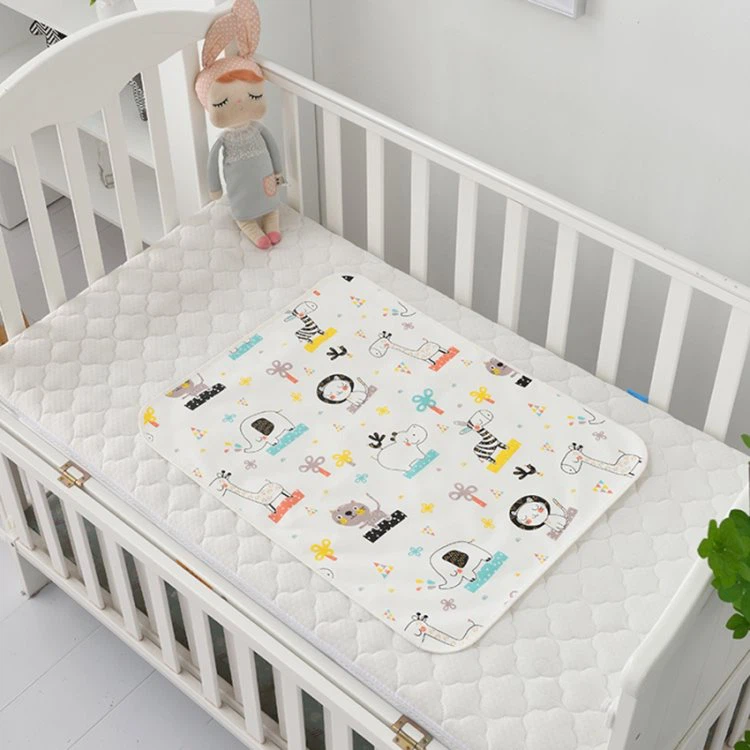
Urine Pad
Description
Technical Parameters
What is Urine Pad
A urine pad works by providing a clean, soft, and cushioned surface for your baby during diaper changes. It typically consists of a comfortable foam or cushioned material covered with a waterproof or easy-to-clean fabric.
Benefits of Urine Pad
The first benefit you will surely love is keeping your nursery room clean. If your diaper changing table is inside the nursery or you usually change diapers on a bed, make sure that the cushion underneath will not be stained by poop or pee by adding a layer of the urine pad over it. Even if your child holds tantrums while changing the diaper or moves uncontrollably, the mess will be caught by the urine pad.
You may even totally forget about the mess of diaper changing because babies usually cry and do not hold still when they do not feel comfortable. A urine pad made of cotton material keeps your baby cool for the summer, while pads made with fleece or polyester are best for cold weather. Surely, your child will not be restless because there are pads that keep them warm or cool even when their bottoms are exposed. You can put diapers on them in minutes!
Many establishments are parent and baby-friendly. Most malls have dedicated comfort room cubicles for a diaper changing bed. Yet, as a parent, your mind surely thinks twice of just laying your child there right away. Keep your baby from microscopic germs and bacteria by spreading the diaper changing pad on the changing public bed. Your child will lay on a clean cushion and will also feel less anxious changing diapers in a place unfamiliar to them.
Whether you are visiting friends and relatives for a day or you are on a week-long trip to the beach, you will not worry about messing up someone else's sheets because you have a portable diaper changing pad. Many versions of this product come in compact designs and can just be rolled, folded, and inserted into your baby bag. When the diaper changing time comes, find a private room, and, like Dora The Explorer's backpack, just pull it out and use it.
There are tons of designs you can choose from. You can go for pads with cute baby-friendly patterns like clouds, stars, baby animals, teddy bears, and flowers. Or, you can also go for plain colors of gray, pink, dark blue, or white to match any background and your nursery bedding easily. Whatever your choice is, make sure to prioritize you and your baby's comfort first.

Why Choose us
Quality products: Our company offers high-quality home furnishings that meet the industry's standard.
Affordable pricing: We offer competitive pricing that caters to a wide range of customers.
Wide range of products: We provide a variety of products that cater to different customer needs.
Excellent customer service: Our customer service team is dedicated to ensuring our clients receive prompt and professional services.
Fast delivery: Our delivery team ensures products reach customers promptly.
Experienced workforce: Our team comprises highly skilled and experienced personnel who guarantee quality services.customized solutions.
Look For The Best Urine Pad
For babies, extra security always comes first, and if you know that you have an active little one, look for designs that have straps that can secure the upper half of their body and another safety strap to be attached to the diaper changing table. It will ensure that both the baby and pad will not fall or move too much while being changed.
Another detail you should check is the fabric used for the pads. Some babies are allergic to fleece or polyester, so you can go for cotton if this is the case. Make sure to read the labels and take only the products marked with safety certification and are BPA-free.
Next, choose a design that is easy to clean. There are pads with a waterproof cover design, which you can wipe and disinfect with alcohol after use. If you are using urine pads made of cloth, you need to throw them in the washer and dry it. Make the cleaning often to ensure your baby is lying on clean changing pads.
Finally, have a urine pads wherever you go by picking the design that you can fold into mini bags. Since you want this design for your travels, you might as well choose the product with a diaper and baby wet wipes pouches. With this, when you lay the changing pad outdoors, all the paraphernalia you need to clean your baby are just within reach and in one place.
What Are The Types Of Urine Pad?
Traditional urine pad
These are the tried-and-true classics designed for dedicated changing areas or tables. Available in contoured or flat designs, they boast a comfortable and easy-to-clean surface, ensuring smooth diaper changes. With their sturdy construction, they become a reliable part of your nursery setup, offering durability for countless diaper-changing sessions.
Portable urine pad
For parents on the move, these compact, lightweight, and easily foldable pads are a lifesaver. They're tailored for travel or outings, offering a padded surface for your baby's comfort and easily storable in your diaper bag. Whether it's a quick trip to the park or an extended vacation, these portable pads provide a clean and comfortable changing space wherever you go.
If you're seeking a top-quality option, consider the urine pad. Made from vegan leather, it's not only stylish but also wipeable, making clean-ups effortless. Plus, its compact design ensures it fits perfectly in any diaper bag, ready for on-the-go adventures.
Changing pad covers
Elevate both style and hygiene with these snug-fitting covers for your traditional changing pad. They not only add an extra layer of comfort for your little one but also come in a variety of colors and patterns, allowing you to customize your changing area. Plus, they're machine washable, making cleanup a breeze. With their soft and premium fabrics, these covers become a delightful addition to your nursery decor.
Disposable urine pad
Busy parents will appreciate the convenience and hygiene these offer. Designed for one-time use, they're perfect for travel or situations where a clean changing surface is a must. Simply toss them after use to maintain a sanitary diaper-changing routine. With their leak-proof and ultra-absorbent design, these disposable pads provide a worry-free diaper-changing experience.
How Do You Choose The Best Urine Pad For You?
Assess Your Space: Begin by measuring the available space in your designated changing area. This ensures a comfortable fit for the changing pad without overcrowding or being too small. An appropriately sized urine pad streamlines diaper changes.
Consider Your Lifestyle: Reflect on your daily routines and lifestyle. Are you always on the go or primarily changing diapers at home? If you're frequently on the move, prioritize a portable urine pad that's easy to fold and carry. For home-based routines, opt for a substantial, comfortable pad.
Budget Wisely: Set a budget before you start shopping. It's essential for narrowing down your options and finding the best value for your money. While there's a range of urine pad available at various price points, knowing your budget ensures a smart purchase.
Read Reviews: Read online reviews and ratings of different urine pads. Insights from other parents can guide you on quality, durability, and user-friendliness. This step helps you avoid potential issues and steer you towards a pad that meets your expectations.
Compare Options: Don't rush the decision process – compare different types, brands, and designs of urine pads. Look for features aligning with your needs and preferences. By comparing, you ensure your chosen pad meets practical requirements and aligns with your parenting style.
Trust Your Instincts: Lastly, trust your parental instincts. Sometimes, your gut feeling is a valuable guide. If a urine pad resonates with you and feels right for your baby, it's likely an excellent choice. Parenting involves countless decisions – your instincts can be a powerful tool for making them!
What Are Considerations When Using Urine Pads?
Safety standards
Ensure the urine padmeets safety standards to protect your baby.
Cleaning And Maintenance
Check if it's easy to clean and maintain.
Comfort
Your baby's comfort is paramount. Opt for a padded surface.
Budget
Set a budget and explore options within your price range.
Material of Urine Pad
Bamboo, being sustainable, eco-friendly, and durable, is an excellent material for urine pad.
It is also super absorbent, making it ideal for use in cloth urine pads. Additionally, it is very breathable, keeping your baby comfortable throughout the day. The material is also hypoallergenic, which is important for those with sensitive skin.
Hypoallergenic means that a material has very few, if any, of the protein molecules that can cause an allergic reaction. These materials are often used in medical settings because they reduce the risk of an allergic reaction.
The downside to using bamboo as a cloth diaper material is that it holds stains. It's also more expensive than other fabrics.
It is also a perfect cloth urine pad material since it is incredibly durable and very absorbent. A cotton and hemp blend is a great combination that provides the steady absorption of cotton and a high total amount of liquid held by the hemp fibers.
Traditionally, cotton was the go-to cloth urine pad material. It is highly absorbent and can hold a good amount of moisture without feeling wet. Moreover, cotton is breathable, keeping your baby comfortable in hot weather. It is also hypoallergenic and gentle on the skin, all great cloth diaper properties.
If you want to buy overnight cloth diapers, look for the ones with a cotton or bamboo insert. In addition, you can add an infant or a preemie prefold inside a larger size pre-fold for extra absorbency.
Since it's biodegradable, cotton is environment-friendly and all-natural. Cotton diapers are also very easy to wash. The only downside to using cotton is that it is not as durable as other materials and may require more frequent changing.
Modal is made using wood pulp and resembles bamboo. The material has a soft feel to it and is very absorbent. In fact, it can hold 50% more liquid than cotton.
Like bamboo, modal is also eco-friendly and hypoallergenic. It is very breathable and can keep your baby comfortable. Additionally, it doesn't hold stains as much as cotton does.
Polyester boasts high absorbency, making it ideal for use in activewear and other garments that might see a lot of sweat. It's also wrinkle-resistant and dries quickly, which is why it's often used in travel clothing.
It is also commonly used as a cloth diapering fabric since it can withstand plenty of washes.
Polyester is a durable fabric, but it can pill easily (those pesky little balls of fabric that form on the fabric's surface after wear and washing).
Try microfiber polyester if you're looking for a polyester cloth diaper less likely to pill. This type of polyester is thinner and smoother than regular polyester.
Company Profile
Nantong Xinchen Home Co., Ltd. has been established for more than 20 years. The factory is located in Rugao, Nantong, two hours' drive from Shanghai. The factory fully meet the consumer personalized demand for household products, through nearly 20 years of accumulation and development, the company has successfully achieved the diversification of products, service humanization, enterprise technology strategic goals, brand value and industry competitiveness has been fully recognized by consumers and industry. Our philosophy: quality-based, integrity is gold, to make customers satisfied with the product, warmly welcome your presence!

Asked Questions
Q: How long can incontinence pads be worn?
Q: How long should you wear a poise pad?
Q: How much pee can a pee pad hold?
Q: What incontinence pad holds the most urine?
They are generally not absorbent enough to be used as sole protection for anything other than very light bladder leakage. If used as the only absorbent product they require clothes to be pulled up around the waist or removed. This is generally considered to be unacceptable for dignity.
Q: What happens if you don't change incontinence pads?
Q: Is there an alternative to incontinence pads?
Q: Should I change my pad every time I pee?
Q: What's the longest you should wear a pad?
Q: How do you know when your pad is full?
Q: Can wearing poise pads cause UTI?
Q: Are incontinence pads better than pants?
Q: Why don't incontinence pads work?
Q: Is double padding abuse?
Q: Are pads or briefs better for incontinence?
Q: What is the best device for female urinary incontinence?
Q: Why do I have to change my pad every 20 minutes?
Q: Is it okay to free bleed at night?
Q: Why do I keep peeing on my pad?
Q: How long should it take for a pad to get full?
Q: Why do my incontinence pads keep on leaking?
Hot Tags: urine pad, China urine pad manufacturers, suppliers, factory, Pure Cotton Children s Bedding,
Previous
No InformationNext
Urine PadSend Inquiry
You Might Also Like


